

5 Steps How to Stop Overthinking and Start Leading (A Guide for New Managers)
- shawnfrederick73
- Mar 20
- 5 min read
You’re sitting at your desk, the cursor is blinking, and you’ve rewritten the same three-sentence email to your team five times. You’re worried about the tone. You’re worried about the timing. You’re worried that if you don't get this perfectly right, the whole department might just crumble by Tuesday.
Sound familiar? Welcome to the "New Manager Mental Loop."
Transitioning into leadership is a bit like being handed the keys to a high-performance vehicle when you’ve spent your whole life riding a bike. Suddenly, every turn feels like a life-or-death decision. You overthink because you care, but here’s the cold, hard truth: overthinking is the silent killer of effective leadership development for new managers. It stalls momentum, breeds anxiety, and, most importantly, it keeps you from actually leading.
I’ve seen it firsthand. I’ve lived it. And I’m here to tell you that leading isn't about being right 100% of the time. It’s about being decisive, being resilient, and being present.
Here are five actionable steps to help you kick the overthinking habit and start leading with the confidence your team needs.
1. The 70% Rule: Trade Perfection for Velocity
We’ve all been taught that more information equals better decisions. In the academic world, maybe. In the leadership world? Not so much. If you wait until you have 100% of the data to make a move, the opportunity has likely already passed you by, or your team has checked out while waiting for your signal.
I recommend the 70% Rule. The idea is simple: make the call when you have roughly 70% of the information you think you need.
Most of the choices you face daily aren't "one-way doors." They are reversible experiments. If you make a tactical error, you can pivot. But if you make no choice at all, you’re stuck in the mud. As you navigate new manager leadership training, remember that clarity usually follows action, not the other way around.
Stop asking, "Is this perfect?" and start asking, "Is this directionally correct and can we recover if we're wrong?" If the answer is yes, hit send.

2. Naming the Fear: Drag the Monster into the Light
Overthinking usually stems from a vague, looming sense of "what if." What if I fail? What if they don't like me? What if I'm not cut out for this? These fears are like monsters under the bed: they look much bigger in the dark.
To stop the loop, you have to bring the fear to the surface. Literally. Write it down.
When you name the specific fear: e.g., "I’m afraid that if I delegate this task and it isn't perfect, my boss will think I’m lazy": it suddenly looks a lot less intimidating. Once it’s on paper, you can deal with it logically. You can create a contingency plan. You can realize that your boss probably values your ability to manage a team's output more than your ability to do everything yourself.
Naming the fear is a core part of mental resilience coaching. It shifts you from an emotional reaction to a tactical response.
3. The 'Privilege' Pivot: Reframe Your Responsibility
A lot of new managers view their new responsibilities as a heavy burden. They feel the weight of "having to have all the answers." This mindset is a direct ticket to burnout.
In my TALK TWO session, I discuss the Privilege of Leadership. This is about a fundamental mindset shift. You don't have to manage these people; you get to. You have the privilege of shaping a culture, supporting a team’s growth, and making decisions that move the needle.
When you pivot from "burden" to "privilege," the pressure to be perfect starts to dissipate. You realize that your role isn't to be a flawless robot; it’s to be a steward of the team’s energy and potential. This shift is essential for executive resilience, especially in high-stress sectors like healthcare or public health where the stakes feel incredibly high.

4. Master the Micro-Decision: Build Your Momentum Muscle
If you’re paralyzed by a big project, stop looking at the big project. You can’t eat the whole elephant at once, and you certainly can’t manage a department-wide restructuring in one afternoon.
The cure for analysis paralysis is Micro-Decisions.
When you feel stuck, find the smallest possible decision you can make right now and make it. It could be as simple as:
Setting the time for the next check-in.
Choosing the font for the presentation.
Asking one team member for their opinion on a specific detail.
These small wins create a "momentum muscle." Every time you make a micro-decision and nothing catches on fire, you’re training your brain to trust your judgment. This is a foundational element of advanced leadership coaching: learning to navigate complexity by focusing on the next right step.

5. The Resilience Reset: The Art of the Quick Recovery
Here’s a secret: You will make a wrong call. You’ll misinterpret a situation, or you’ll back the wrong horse on a project. Overthinkers dwell on these moments for weeks. Resilient leaders use the Resilience Reset.
The Resilience Reset is about recovering quickly rather than perfectly. Instead of spiraling into "I knew I shouldn't have done that," you ask:
What is the current reality?
What can we learn from this?
What is the immediate next move?
Leadership isn't about the absence of failure; it’s about the speed of recovery. We focus heavily on this at Frederick Solutions LLC because we know that in 2026, the pace of change is too fast for long-term wallowing. If you can't reset, you can't lead. This is why grit and mental resilience are non-negotiable for anyone in a management role today.
Taking the Next Step in Your Leadership Journey
Overthinking is just a habit, and like any habit, it can be broken with the right tools and a bit of practice. You were put in this position because someone saw your potential. It’s time you started seeing it, too.
If you’re ready to dive deeper into these strategies and move from "surviving" your new role to actually "thriving" in it, I’d love to help. We have two great ways for you to level up right now:
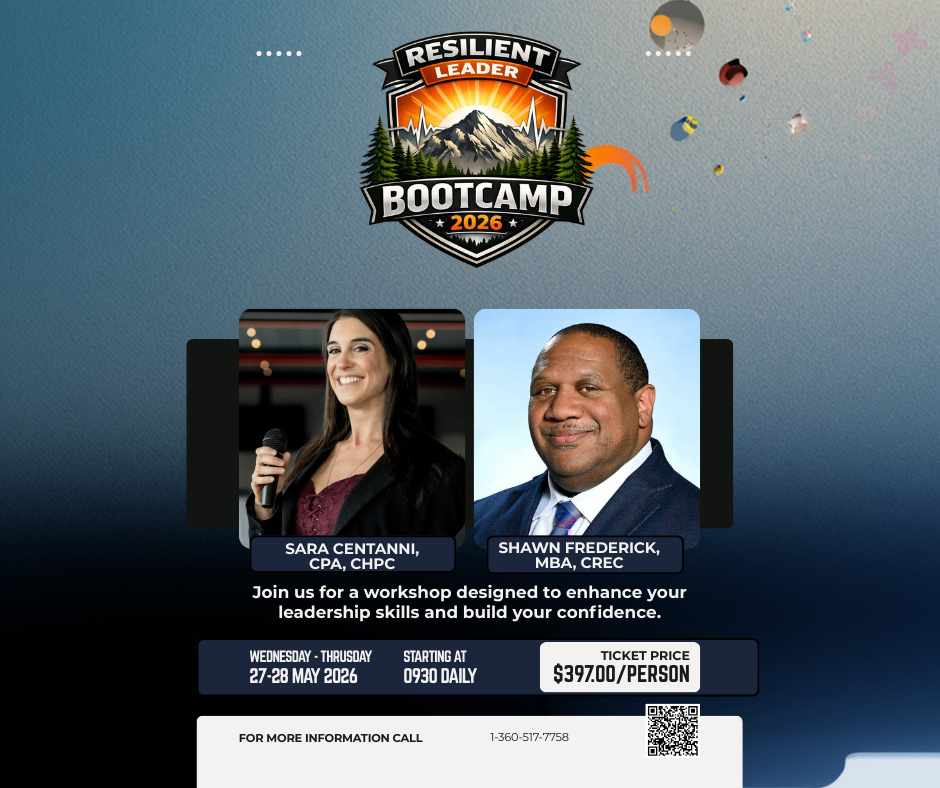
Join us for the Resilient Leader Bootcamp: This is a two-day, high-impact workshop happening May 27–28 in Lake Stevens. We’ll be diving into the tactical side of mental resilience, decision-making, and avoiding the burnout trap that catches so many new leaders. It's the ultimate new manager leadership training experience.
Book a Coaching Session: If you want a more personalized approach to navigating your specific challenges, let’s talk. One-on-one executive coaching can help you unlock your potential and find your unique leadership voice.
Stop overthinking. Start leading. Your team is waiting for you.


Comments