

Is Your Leadership "Why" Strong Enough to Survive a Crisis?
I remember January 2020 like it was yesterday. While most of the world was going about their business, I was standing at the epicenter of a storm no one saw coming. Leading through the first confirmed U.S. COVID-19 case wasn't just a professional challenge; it was a test of everything I had learned in my 20 years as a Navy Corpsman and my three decades in healthcare.
When a crisis of that magnitude hits, your "What" (the tasks on your desk) and your "How" (the standard operating procedures) often evaporate. The processes you relied on yesterday suddenly don't apply to the chaos of today. In those moments, when the system is breaking and the pressure is mounting, there is only one thing left to hold onto: Your Why.
If you don't know exactly why you are leading, you won't just struggle, you will burn out.
The Trap of the "What" and the "How"
In my work with executive coaching and leadership development at Frederick Solutions LLC, I see leaders falling into the same trap every day. They are masters of the What, the KPIs, the quarterly goals, the strategic initiatives. They are experts in the How, the workflows, the technology, the management styles.
But during a crisis, the What becomes overwhelming and the How becomes impossible.
Think about it. When the first COVID case hit, the "How" hadn't been written yet. There was no manual for a global pandemic in the modern age. If I had focused only on the missing processes, I would have been paralyzed. Leadership resilience isn't about having all the answers; it’s about having a reason to keep looking for them when things get dark.
When the tasks (the "What") become a mountain you can't climb, and the processes (the "How") fail you, it is your sense of purpose (the "Why") that prevents leadership burnout.

Why "Why" is the Anchor of Mental Resilience
Mental resilience for leaders is often misunderstood. People think it’s about being "tough" or "gritting your teeth." But after 20 years in the Navy, I can tell you that "tough" has a breaking point. Purpose, however, is durable.
Your "Why" acts as an emotional and cognitive anchor. Research shows that during a crisis, leaders face immense pressure to focus narrowly on immediate threats. This "survival mode" can cause a team to fragment. However, when you maintain a clear sense of purpose, you provide:
Organizational Cohesion: Your team needs to know what remains constant when everything else is changing. Your "Why" is that constant.
Decision-Making Guidance: When you are faced with impossible choices, your core values act as a filter. They help you say "no" to the noise and "yes" to what actually matters.
Sustainable Energy: Burnout happens when your output exceeds your "Why." If you are working 80 hours a week for a paycheck, you’ll crash. If you’re working those hours because you’re saving lives or building a legacy, your brain processes that stress differently.
Resilience Reflects Preparation
I’ve spent over 30 years in public health and healthcare, and if there’s one thing I’ve learned, it’s that you cannot build a "Why" in the middle of a fire. You have to forge it beforehand.
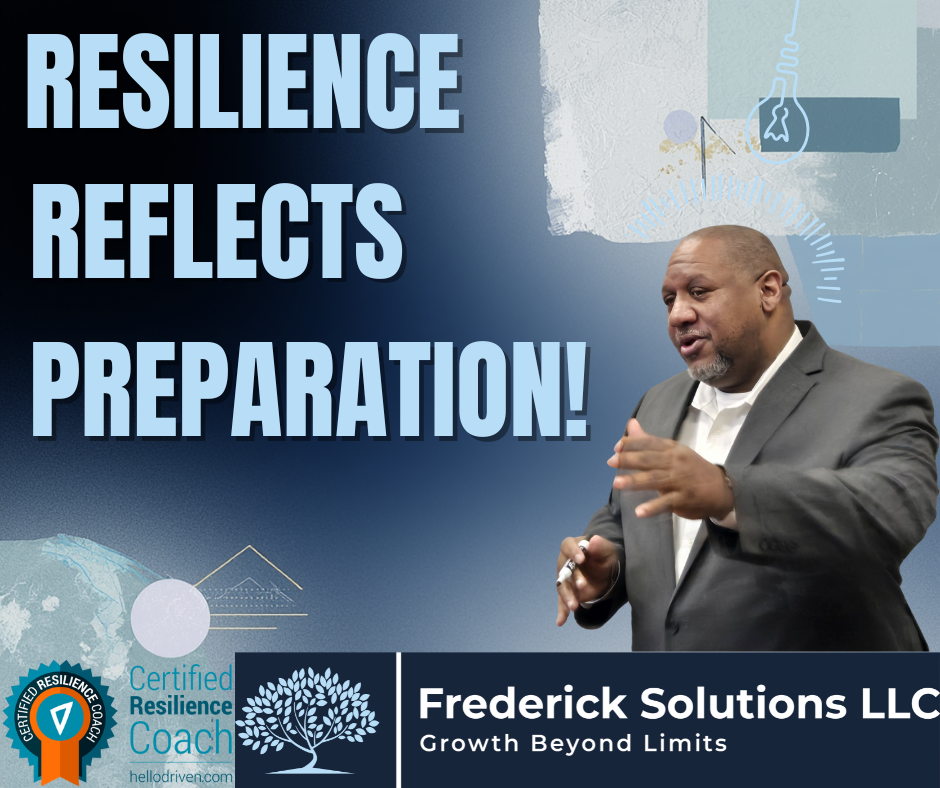
If you wait until the crisis hits to figure out what you stand for, you’ve already lost the lead. Leadership resilience is a muscle developed through intentional reflection and preparation.
I often ask the executives I coach: If your title was taken away tomorrow, and your budget was zeroed out, why would your team still follow you?
If the answer is "I don't know," then your leadership is built on sand. You are at high risk for burnout because you are carrying the weight of the "What" without the fuel of the "Why."
Moving From Chaos to Clarity
In my keynote talk, TALK ONE - Preventing Burnout: A holistic roadmap to improved mental resilience, I dive deep into how leaders can build this personal roadmap. It’s not just about "wellness" or taking a vacation. It’s about aligning your leadership with a purpose that is strong enough to survive the fog of war: or the fog of a failing healthcare system.
You can learn more about how we build these frameworks by visiting our blog or exploring our upcoming events.
When you have a clear "Why," you don't just "get through" a crisis. You lead through it. You become the person who stays calm when everyone else is panicking because you know where the North Star is, even when the clouds are thick.

Is Your "Why" Strong Enough?
Ask yourself these three questions today to test the strength of your leadership anchor:
Is my "Why" internal or external? If your purpose is tied to external validation (promotions, praise, status), it will fail you when those things disappear in a crisis. It must be internal.
Can my "Why" survive a pivot? If your purpose is "to grow this specific department," you’ll crumble if that department is downsized. If your purpose is "to empower others to reach their potential," you can do that anywhere, under any circumstances.
Does my team know my "Why"? Resilience is contagious. If you are grounded in purpose, your team will catch that stability.
Taking the Next Step
Leadership is lonely, but it doesn't have to be isolating. If you feel like you’re running on fumes, or if the "What" and "How" of your daily grind are starting to erode your mental resilience, it’s time to stop and recalibrate.
I’ve lived through the frontlines: from the Navy to the first U.S. COVID case: and I’ve seen what happens when leaders lose their way. I’ve also seen the incredible things that happen when they find it.

If you’re ready to move beyond just "surviving" and want to build a leadership style that is truly burnout-proof, I invite you to join the conversation. We regularly host the Resilient Leader Bootcamp: a high-impact experience designed to help you find your "Why" and build the mental armor you need for the years ahead.
Don't wait for the next crisis to test your foundation. Start building a "Why" that can withstand the storm today. Together, we can create a leadership roadmap that doesn't just focus on performance, but on the enduring purpose that makes that performance possible.
For more insights on navigating these challenges, check out my post on 7 mistakes you’re making with leadership grit.
Your "Why" is your superpower. Use it.


Comments