


Resilient Leadership Isn’t Solo: Why Your Support System Is a Strategic Asset
Updated: 1 day ago
An introduction: you were not meant to lead alone
Welcome. I’m glad you’re here.
This edition centers on a truth I have seen again and again in leadership: resilient leadership is not a solo endeavor. Leading well does not mean carrying every burden by yourself. It means recognizing that support is not a weakness—it is part of what makes resilience possible.
If you lead in healthcare, public health, government, emergency services, or another high-stress environment, you may know how isolating leadership can feel. The pressure is real, the pace is relentless, and the expectation to stay steady for everyone else can quietly push you into carrying too much alone.
In this newsletter, we will explore why your support system is more than a personal comfort. It is a strategic asset that strengthens judgment, protects capacity, and helps you lead with greater clarity, endurance, and humanity.
A warm note before we begin
If you are leading in healthcare, public health, government, emergency services, or another high-stress environment, I want you to know something important: feeling the weight of leadership does not mean you are failing.
The demands are real. Staffing strain, burnout, rapid change, rising expectations, and difficult decisions can leave even experienced leaders feeling isolated. I have seen this firsthand throughout my work in healthcare, public health, crisis response, and leadership development.
You may be capable of carrying a great deal. But you were never meant to carry everything alone.
Welcome to Growth Beyond Limits, where we explore practical ways to lead with greater resilience, clarity, and humanity.
Subscribe to Growth Beyond Limits
If this conversation speaks to the season of leadership you are navigating, subscribe to Growth Beyond Limits for practical insights on mental resilience, leadership development, burnout prevention, and sustainable performance.
Each newsletter is designed to help you pause, reflect, and take one meaningful step forward, especially when the pressure is high.
The leadership pressure is no longer isolated
The 2026 management landscape makes one reality increasingly clear: leaders are carrying more pressure while receiving too little support.
Research from SHRM, Deloitte, and Gallup points to overlapping concerns:
Burnout and chronic stress
Staffing shortages and capacity constraints
Manager development gaps
Declining engagement
Change exhaustion
Erosion of trust
Pressure to sustain performance with fewer resources
These concerns do not operate independently. They compound.
A manager who is already exhausted may have less patience for a difficult conversation. A leader working through constant staffing shortages may stop asking for help because everyone else appears overwhelmed. A supervisor facing rapid change may begin making decisions in isolation simply because there is no time to gather perspective.
That is how leadership isolation accelerates burnout.
Not because leaders lack strength. Because sustained pressure narrows our thinking, reduces our emotional margin, and makes every challenge feel like a personal responsibility.
The myth of the self-sufficient leader
Many of us learned an outdated version of leadership: the leader has the answers, absorbs the pressure, and protects everyone else from uncertainty.
This image can look admirable from the outside. It can also become deeply unhealthy.
The self-sufficient leader may:
Avoid sharing uncertainty with trusted colleagues
Treat recovery time as optional
Believe asking for help will reduce credibility
Carry decisions that should be distributed
Confuse independence with isolation
Wait until exhaustion becomes a crisis before speaking honestly
I understand the temptation. In high-stress sectors, your team needs steadiness. Patients, communities, employees, and stakeholders need you to make sound decisions when conditions are unclear.
But steadiness does not require solitude.
In fact, the most resilient leaders I have encountered are not those who never need support. They are the ones who build support into the way they lead.
Your support network is not a personal luxury. It is part of your operating system.
What kind of support does a leader actually need?
Support is not one-size-fits-all. You may have colleagues around you and still feel profoundly alone if those relationships do not meet the kind of support you need.
Here are five forms of support worth cultivating.
1. Peers who understand the pressure
A peer can help you remember that your experience is not unusual or shameful.
This might be another department director, a fellow public health leader, a physician administrator, or a supervisor working through similar operational challenges. Peer relationships create space for honest questions:
“How are you handling this staffing issue?”
“What are you seeing that I might be missing?”
“How are you protecting your team’s capacity?”
“What would you do differently next time?”
You do not need a large network. You need a few relationships where candor is safe.
2. Mentors who expand your perspective
A mentor helps you see beyond the immediate pressure.
They may have navigated a crisis you are encountering for the first time. They may recognize a pattern that is difficult for you to see because you are too close to the situation. They may also challenge assumptions that are limiting your choices.
Mentorship is not about finding someone with all the answers. It is about gaining access to experience, perspective, and thoughtful questions.
3. A trusted thought partner
A thought partner is someone who can help you process complexity without immediately trying to solve it for you.
This person may ask:
“What is the real decision in front of you?”
“What are you carrying that belongs to someone else?”
“What would change if you stopped waiting for perfect certainty?”
“What does your team need from you right now, and what do you need from them?”
In my experience, this kind of conversation can restore judgment and composure. It helps you move from reaction to reflection.

4. Team-level support
Your support system should not exist only above you. It should also exist within your team.
This means building shared ownership, clear decision rights, and psychological safety. It means making it possible for people to raise concerns before they become failures. It means creating a culture where asking for help is viewed as responsible, not weak.
A team cannot sustainably depend on one heroic leader. It needs distributed capability.
5. Recovery time
Recovery is not simply what happens after the work is finished. In high-stress leadership, the work is rarely finished.
Recovery must become part of the rhythm.
That may include:
Ten quiet minutes between difficult meetings
A protected lunch break
A walk before making a major decision
A no-meeting block for strategic thinking
A genuine day away from work
A conversation that allows you to set down the emotional weight of the role
Recovery protects the very capacities leadership requires: attention, empathy, judgment, and patience.

Build support deliberately, do not wait for it to appear
Strong support networks rarely happen by accident. They develop through intention, consistency, and reciprocity.
Here is a simple approach you can begin this month.
Identify your five people
Write down the names of:
A peer who understands your operating environment
A mentor who offers experience and perspective
A trusted thought partner
A team member who can share ownership
Someone who helps you reconnect with life beyond work
You may not have all five today. That is useful information, not a judgment.
Schedule one meaningful conversation
Choose one person and put a conversation on the calendar. Keep it manageable: 30 minutes may be enough.
Do not make the entire conversation about updates, tasks, or performance. Consider asking:
“What are you noticing about how I am carrying this season of leadership?”
Then listen.
Make one responsibility more distributed
Look at your current workload and identify one decision, process, or responsibility that can be shared more effectively.
Delegation is not abandonment. It is a way to build capacity, trust, and resilience across the team.
Protect one recovery rhythm
Select one recovery practice that is realistic rather than idealistic. It could be a weekly walk, a quiet start to the morning, or a protected block after a demanding operational meeting.
Small and consistent is more sustainable than ambitious and abandoned.
Close the loop with your team
Ask your team:
“Where are we relying too heavily on one person?”
“What support would help us work more sustainably?”
“What is making it harder to speak up?”
“What is one thing we could simplify this month?”
Then act on at least one response.
Trust grows when people see that their input leads to meaningful action.
A supported leader creates a supported team
Your team watches how you handle pressure.
If you never pause, they may believe pausing is unsafe. If you never ask for help, they may assume that strong performers must manage everything alone. If you respond defensively to difficult feedback, they may stop bringing you the information you need most.
But when you model thoughtful support, you give your team permission to do the same.
You show them that:
Collaboration is a strength
Recovery supports performance
Transparency builds trust
Shared responsibility improves resilience
Asking for help protects quality
This connects directly to retention. People are more likely to remain in demanding workplaces when they experience meaningful support, trustworthy leadership, and a realistic path to sustainable performance.
A supported leader does not remove every difficulty. A supported leader helps the team face difficulty without feeling abandoned.
Reflection: where are you carrying too much alone?
Take a few minutes to consider these questions:
Where has leadership become unnecessarily isolating for me?
What decision would benefit from another perspective?
Who can tell me the truth with care?
Where am I unintentionally rewarding overwork?
What support does my team need from me, and what support do I need from them?
What is one relationship I can strengthen this month?
What would sustainable leadership look like in my current reality?
You do not need to solve everything today. Start by naming what is true.
The spirit behind Resilience in Motion is collective as much as individual: you’re not meant to do this alone. Resilience becomes stronger when it moves between people: through shared experience, honest conversation, practical support, and a common commitment to keep growing.
Resilience in Motion is available now for leaders who want to continue exploring what it means to move through adversity without losing connection to purpose, humanity, or one another.
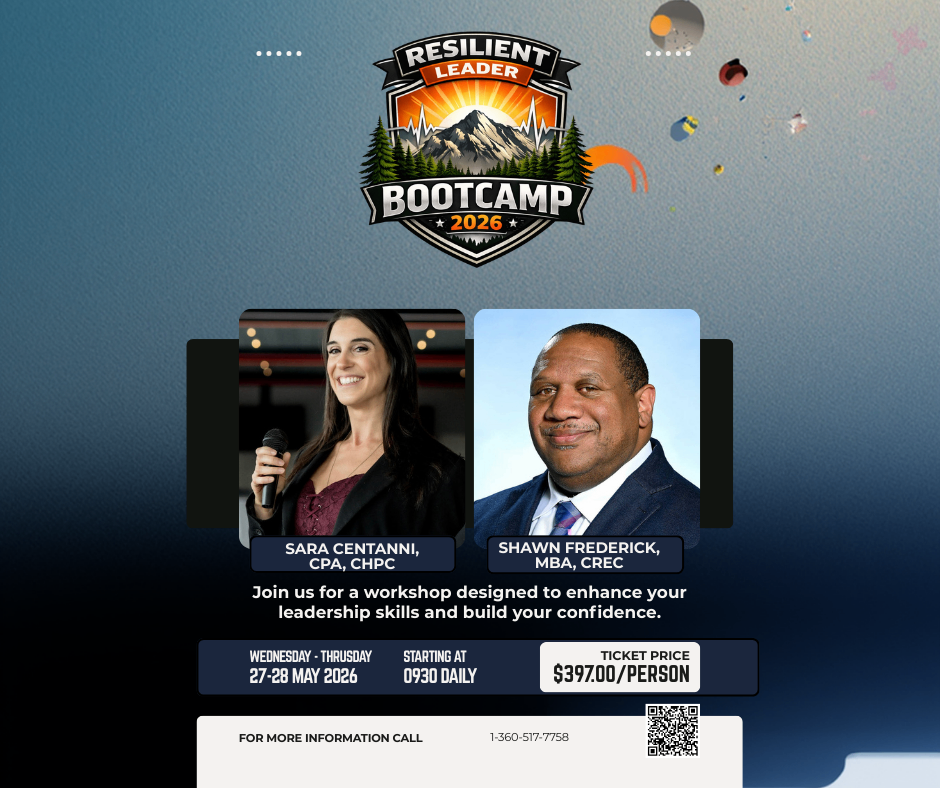
Join the Resilient Leader Bootcamp
The Resilient Leader Bootcamp is designed for leaders who want practical tools for building confidence, strengthening decision-making, supporting their teams, and navigating adversity without burning out.
You can register for the Resilient Leader Bootcamp here and explore upcoming opportunities to grow alongside other leaders facing complex challenges.
Listen to the Growth Beyond Limits Podcast
For more conversations about leadership, resilience, and growth, listen to the Growth Beyond Limits Podcast.
The Growth Beyond Limits Podcast is available on Apple Podcasts, Spotify, Amazon Music, and other major podcast hosting platforms.
You will find reflections and practical ideas for leading through change, protecting your capacity, and creating healthier environments for the people you serve.
Leadership is demanding. It is also deeply human.
Let’s stop treating support as something we earn only after we are exhausted. Let’s build it into the way we lead, so our judgment stays clear, our teams stay connected, and our performance remains sustainable.
You are capable. You are responsible. And you do not have to do this alone.
Comments