

The AI Anxiety Audit: Leading Teams Through the Tech Shift
I’ve been spending a lot of time lately talking with practice managers, hospital administrators, and public health directors. If there’s one word that keeps surfacing in our coffee chats and coaching sessions, it’s "noise." Specifically, the noise surrounding Artificial Intelligence.
In early 2026, we aren't just talking about AI as a futuristic concept anymore. It’s here. It’s in your billing software, your diagnostic tools, and your scheduling systems. But while the tech is evolving at lightning speed, the human element: your team: is often trailing behind in a cloud of uncertainty.
I call this "AI Anxiety," and if you aren't addressing it, you're looking at a fast track to widespread leadership burnout and team disengagement. Today, I want to walk you through how to conduct an "AI Anxiety Audit" and why your personal Reasoning (for evaluating AI as a tool) and Composure (for managing the anxiety/stress of the shift): two of the core domains of the PR6 resilience model: are the key to leading your team through this shift without losing your sanity.
The Leadership Vacuum: Why Silence is Costing You
I’ve seen a recurring theme in healthcare leadership: we assume that if we aren't talking about AI, it isn't affecting the staff. We think, "We’ll cross that bridge when the new software launches next quarter."
But here’s the reality: research shows a massive "leadership vacuum" when it comes to technology. Less than 20% of employees have heard from their direct manager about how AI will impact their specific roles. When you stay silent, your team fills that silence with fear. They wonder, "Is this bot going to replace my job?" or "Am I going to have to learn a whole new system while I'm already drowning in my current workload?"
This uncertainty is a primary driver of leadership burnout. When you don't have a plan for the "people side" of tech, you end up absorbing the secondary trauma of a stressed-out, resistant team.

Step 1: Laying the Groundwork for the Audit
An AI Anxiety Audit isn't about the software; it’s about the soul of your organization. It’s a pulse check. I recommend starting with what I call the "Groundwork Phase."
Before you roll out a single update, you need to build a culture of trust. I’ve found that the most resilient leaders are the ones who normalize the process of internal evaluation. You want to ask your team:
What are you hearing about the new tools we're exploring?
What is your biggest fear regarding your daily workflow changing?
Where do you feel technology could actually save you time?
By asking these questions, you move from a top-down "imposition" of tech to a collaborative evolution. This is how you start preventing burnout in healthcare leaders and their teams.
Step 2: The Power of Reasoning and Composure (The PR6 Domains)
In my work with Frederick Solutions LLC, we use the PR6 Toolkit to measure and build mental resilience. The six key domains are Vision, Composure, Reasoning, Health, Tenacity, and Collaboration. In the context of an AI rollout, two domains matter immediately: Reasoning and Composure.
Reasoning isn't just "thinking harder." It’s your ability to evaluate AI as a tool—spot limitations, ask better questions, and make sound decisions without overreacting to hype. In the context of AI, a leader with strong reasoning doesn't see a new algorithm as a replacement for human judgment. They see it as a tool that frees up their team to do what humans do best: provide empathy, complex problem-solving, and high-level care.
Composure is the other half of the equation. It’s the capacity to manage the anxiety and stress of the shift—yours and your team’s—so the change doesn’t turn into a culture-wide pressure cooker.

When you model reasoning and composure, you give your team "psychological permission" to experiment. I’ve seen firsthand how a leader who says, "I’m not sure exactly how this tool will work yet, but let's figure out how it can make our lives easier together," instantly lowers the collective blood pressure of the room.
Step 3: Reframing the Narrative: Tool vs. Threat
I want to be very clear: AI should be a tool, not a threat.
If your team perceives AI as a threat to their livelihood, they will subconsciously (or consciously) sabotage the rollout. To prevent this, your communication needs to shift from "efficiency" to "enablement."
Instead of saying, "This AI will reduce our overhead," try, "This tool is going to take the mundane data entry off your plate so you can actually spend more time with patients."
One is about the bottom line; the other is about leadership development for healthcare and restoring the joy of work. When we focus on the human capability, we bridge the performance-burnout gap.
Step 4: Supporting Your Change Agents
Your front-line managers are feeling the most heat. They are the ones answering the "Why?" questions every single day. If they feel stuck or unsupported, the whole system cracks.
I recommend providing your managers with specific change management training. Don’t just give them a manual for the software; give them a roadmap for the emotional transition. I’ve found that when managers have the tools to handle "composure" (another PR6 domain), they can lead through the tech shift without it becoming a crisis.
You can’t pour from an empty cup. If you’re a leader feeling the weight of these changes, you might be experiencing what I call "Quiet Cracking." Check out my thoughts on the early warning signs of burnout to see if you need to step back and recalibrate.

Step 5: Removing Roadblocks and Reskilling
The final part of your audit is looking at the tangible barriers. Sometimes the "anxiety" isn't about the AI: it’s about the lack of training.
Make reskilling a central part of your budget, not an afterthought. When employees engage in active learning, their sense of belonging and career security skyrockets. Start with low-risk "wins": using AI for meeting summaries or drafting routine emails. Once they see the "time-save," the anxiety starts to melt away.
Leadership resilience is a muscle. You build it by navigating these exact types of forked roads. You can find more about this in my proven resilience roadmap.
It’s Time to Build Your Resilience Muscle
Look, leading in healthcare and public health in 2026 is a different beast than it was even two years ago. The technical shifts are relentless, and the systemic pressures are at an all-time high. You cannot rely on "bouncing back" anymore: you have to build the capacity to thrive within the change.
That’s why I’m so passionate about what we’re doing this May.
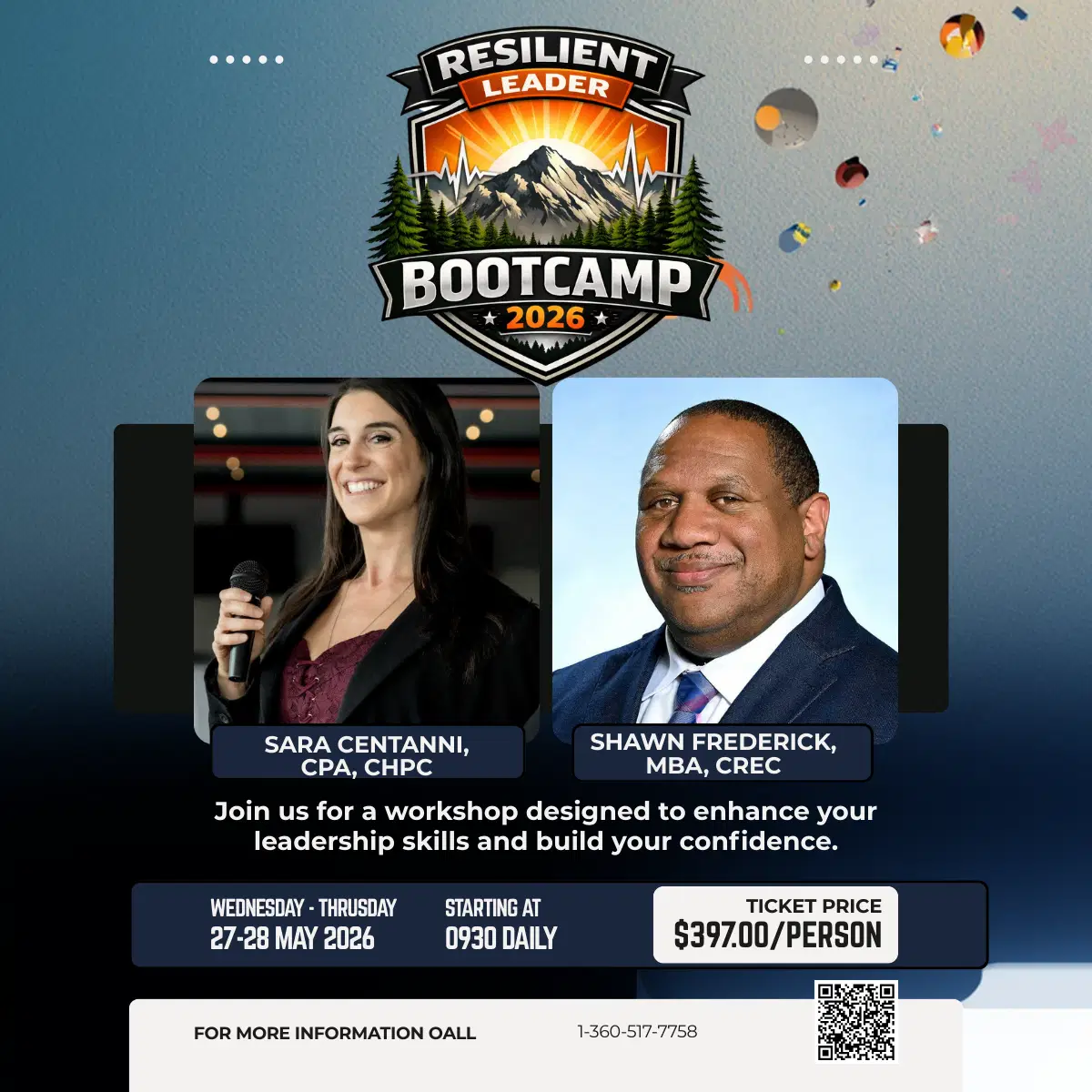
If you’re ready to stop just "surviving" the noise and start leading with intentionality, I want to invite you to join us at the Resilient Leader Bootcamp.
When: May 27-28, 2026 Where: Lake Stevens, WA
This isn't your typical "sit and listen" seminar. We are going to dive deep into the PR6 domains—Vision, Composure, Reasoning, Health, Tenacity, and Collaboration—so you can walk back into your clinic or office with a concrete plan to handle tech shifts, team dynamics, and your own personal wellness.
I want to make it even easier for you to join us. Use the code EARLYBIRD20 when you register to get 20% off your ticket.
Final Thoughts
AI isn't the enemy: isolation and uncertainty are. By conducting an AI Anxiety Audit and leaning into your reasoning and composure, you aren't just implementing new tech; you’re building a more resilient, future-proof team.
Leadership is a privilege, but it’s also a responsibility to guard the well-being of those you lead. Don’t let the tech shift be the thing that breaks your culture. Let’s build something stronger together.
I’ll see you in Lake Stevens!
( Shawn)


Comments