

The Quiet Cracking: Spotting Burnout Before the System Fails
In the halls of healthcare and the front lines of public health, we’re seeing a new phenomenon in 2026. It’s not the dramatic "I quit" speeches or the visible meltdowns we saw a few years ago. It’s something quieter, more structural, and arguably more dangerous.
I call it The Quiet Cracking.
You know the feeling. On the surface, you’re still hitting your KPIs. You’re attending the board meetings, you’re answering the midnight emails, and you’re saying all the right things to your team. But internally? The foundation is splintering. You’re performing your job, but you’re suffering silently. It’s not a choice to disengage; it’s an involuntary erosion of your capacity to lead.
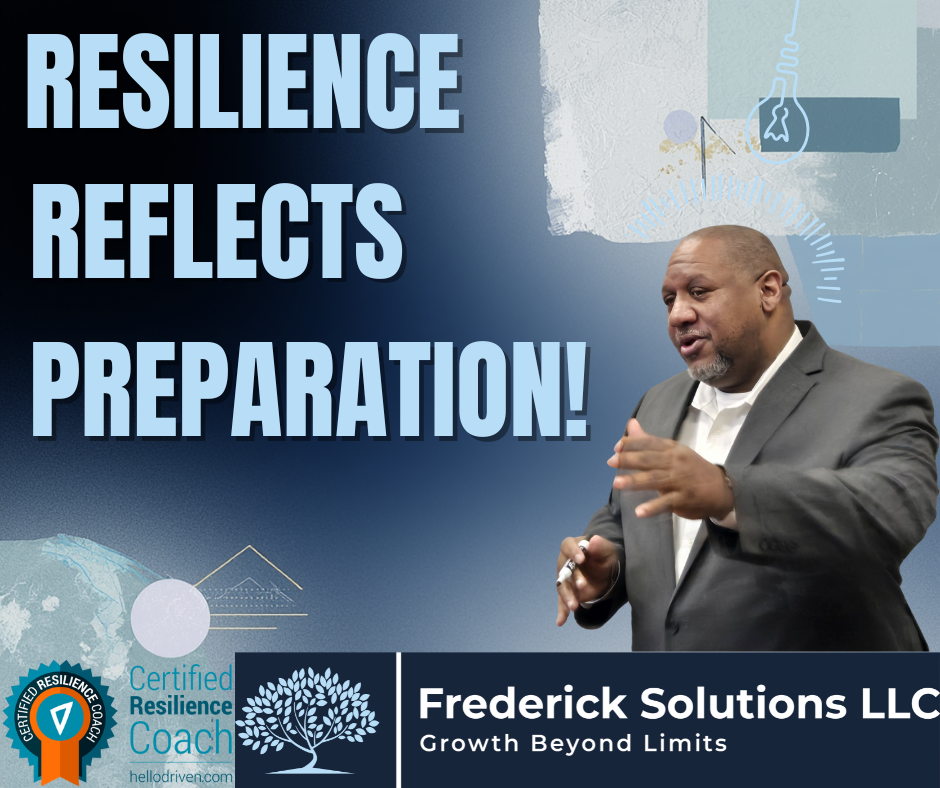
I’ve spent years in high-pressure environments: from my time as a Navy Corpsman to leading teams through the chaos of the COVID-19 pandemic. If there’s one thing I’ve learned, it’s that resilience reflects preparation. When the system starts to crack, it’s rarely because of a single event. It’s because the internal structure wasn't reinforced to handle the sustained pressure of modern leadership.
The Difference Between "Quiet Quitting" and "Quiet Cracking"
We’ve all heard of "Quiet Quitting": that intentional choice to do the bare minimum and clock out. But for leaders in healthcare and public health, that’s rarely the case. You care too much. You’re driven by a mission.
Quiet Cracking is different. It’s when a leader wants to perform at 100%, but their "engine" is misfiring. You aren't choosing to pull back; you are losing the ability to push forward. It’s the acute tipping point before a total system failure.
In my work at Frederick Solutions LLC, I see high-achieving leaders who are structurally failing while appearing perfectly fine. It’s a performance-burnout gap that is swallowing some of our best talent.
Spotting the Early Warning Signs of Leadership Burnout
Early detection is the only way to prevent a total collapse. As a leader, you need to be an expert at reading the "vitals" of your own mental state and that of your senior staff. Here are the red flags of Quiet Cracking:
1. The "Mental Freeze" and Cognitive Overload
You find yourself staring at an email for twenty minutes, unable to formulate a response. Or perhaps you're in a meeting and realize you haven't processed a word said in the last ten minutes. This isn't just being tired; it’s your brain hitting its processing limit.
2. Emotional Flatness
When a team member brings you a win, you feel... nothing. When a crisis hits, you don't feel stress; you feel a hollow sense of "here we go again." This detachment is a survival mechanism, but it kills your ability to lead with empathy.
3. The "Hero" Withdrawal
I’ve seen this often in healthcare leadership. High performers start working late, refusing to delegate, and pulling away from social interactions. They think they’re protecting the team by "taking it all on," but they’re actually isolating themselves on a sinking ship.
4. Decision Paralysis
In the Navy, we were trained to make decisions under fire. In 2026, the "fire" is constant. If you find yourself unable to make simple tactical choices because you’re worried about every possible outcome, the cracking has begun.

Why Resilience Reflects Preparation
One of my core mantras is that resilience reflects preparation.
When I was a Corpsman, we didn't wait for the casualty to arrive to decide how to use a tourniquet. We practiced until the movement was muscle memory. Leadership resilience for leaders works the same way. You cannot build a resilient mindset in the middle of a breakdown; you have to build the structure before the storm hits.
If you feel like you’re just surviving the week, you aren't leading: you're reacting. To move from reactive management to proactive leadership, we use a framework called the PR6 Resilience Model. This isn't about "self-care" in the sense of taking a day off. It’s about building a mental architecture that can withstand high-velocity change.
The 6 Domains of Mental Resilience for Leaders
To stop the cracking, we have to look at the six specific domains of the PR6 model. If one of these is weak, the whole structure is at risk.
Vision: This is your North Star. When things get chaotic, do you remember why you’re doing this? Without a clear sense of purpose, leadership becomes a chore rather than a calling.
Composure: Can you regulate your emotions when the pressure is on? This isn't about being a robot; it's about staying present and calm so your team can do the same.
Reasoning: This is your ability to problem-solve under stress. Instead of falling into "the sky is falling" thinking, reasoning allows you to break challenges down into actionable steps.
Health: You cannot lead if your body is failing. Sleep, nutrition, and movement are the fuel for your leadership engine.
Tenacity: This is the "grit" factor. It’s the ability to keep going when things are tough, but doing so with a strategy, not just blind stubbornness.
Collaboration: No leader is an island. This is about building a support system and knowing when to lean on your team.
If you’re interested in how these domains interact, I’ve written more about bridging the performance gap in our ultimate guide to mental resilience for leaders.
Moving Beyond "Wellness Programs"
Most corporate wellness programs fail because they try to fix systemic stress with individual "hacks." A yoga app isn't going to fix a broken organizational culture or a crushing workload.
Effective burnout prevention training must be structural. It requires executive resilience coaching that looks at how you manage your time, how you set boundaries, and how you process the secondary trauma that is so common in healthcare and public health.
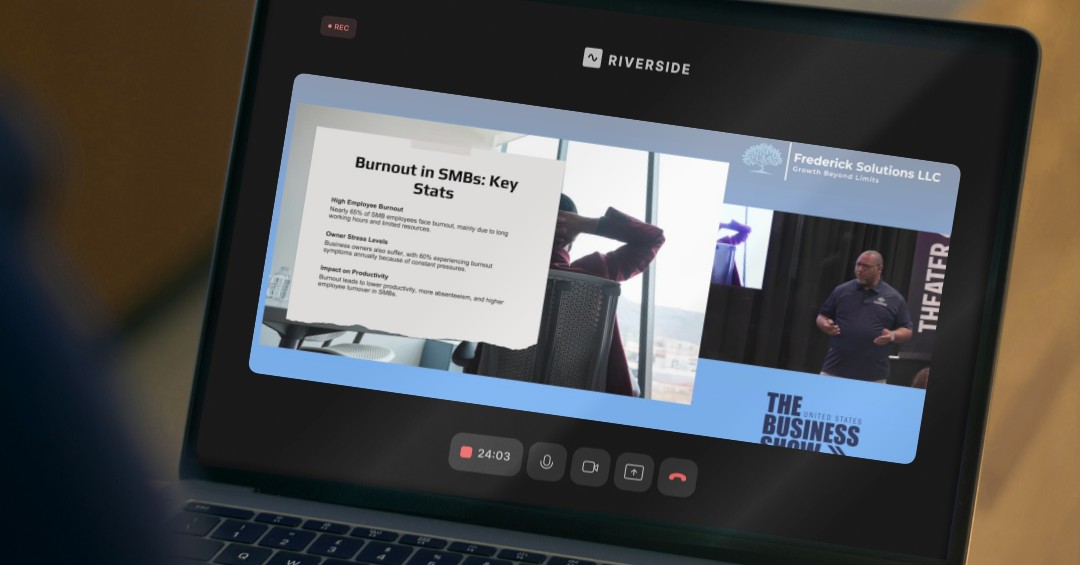
I've seen firsthand how leadership burnout in 2026 is evolving. The pressure isn't going away, but the way we handle it can.
The Path Forward: Choosing Resilience
If you feel the "quiet cracking" starting in your own life or your organization, the worst thing you can do is wait for it to "get better on its own." It won't. Systems that are cracking under pressure eventually fail.
You have a choice. You can continue to absorb the stress until you break, or you can choose to reinforce your foundation.

Building resilience is a muscle. It’s a discipline. And honestly, it’s easier to do when you have a roadmap and a community of peers who are facing the same challenges.
Join Us at the Resilient Leader Bootcamp
If you’re ready to stop the cracking and start building a leadership style that is sustainable, I want to invite you to join us.
On May 27-28, 2026, I’ll be hosting the Resilient Leader Bootcamp in Lake Stevens. This isn't just another seminar where you sit and listen. It’s an intensive, hands-on workshop designed for leaders in high-stress sectors like healthcare and public health.
We’re going to dive deep into the PR6 model, tackle the specific stressors of your role, and give you the practical tools you need to lead with confidence: no matter what the system throws at you.
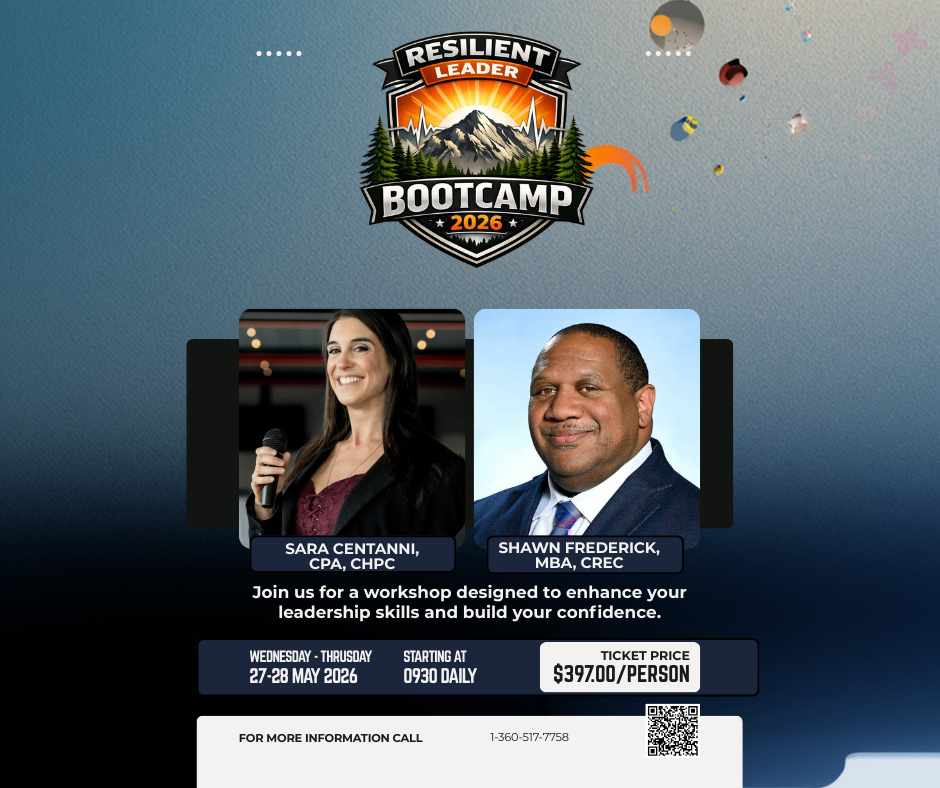
You can find all the details and secure your spot here: Resilient Leader Bootcamp Event Details.
Don't wait until the crack becomes a break. Your team needs you at your best, and more importantly, you deserve to lead without losing your soul in the process.
Let’s build something that lasts.
: Shawn Frederick, Founder, Frederick Solutions LLC


Comments