

Struggling for Retention? 10 New Manager Leadership Training Ideas to Build Culture
Let’s be honest: nobody wakes up and decides they want to be a "bad manager."
In high-stress sectors like healthcare, public health, and government, most new managers are promoted because they were rockstars at their previous jobs. They were the best nurses, the most efficient analysts, or the most dedicated social workers. But then, the "Promotion Fairy" taps them on the shoulder, gives them a shiny new title, a 5% raise, and zero training on how to actually lead human beings.
Suddenly, they are responsible for budgets, conflict resolution, and: most importantly: the retention of their team.
I’ve seen it firsthand: when new managers aren't equipped with leadership resilience, they default to "survival mode." And survival mode in management is the fastest way to trigger burnout and turnover across an entire department. If you’re struggling with retention, the problem might not be your benefits package; it might be that your new managers are drowning.
The good news? Leadership is a skill, not a birthright. By investing in new manager leadership training, you can shift your culture from "just getting through the shift" to a place where people actually want to stay.
Here are 10 practical, high-impact training ideas to build a culture that lasts.
1. Master "The 70% Rule" for Decision Making
One of the biggest drivers of burnout for new managers is "Analysis Paralysis." They feel they need 100% of the information before making a move. In a fast-paced environment like a hospital or a government agency, waiting for 100% certainty means you’re already too late.
I teach my clients the 70% Rule: if you have 70% of the information and 70% confidence, make the call. Training your managers to be decisive builds trust and momentum. It prevents the "clogged pipe" feeling where teams are waiting on a manager who is too afraid to make a mistake.
2. Emotional Intelligence (EQ) as a Baseline
We talk a lot about IQ, but in leadership, EQ is the currency that matters. Research shows that the relationship between an employee and their direct manager is the single strongest predictor of retention.
Training should focus on self-awareness and empathy. Can the manager recognize when they are projecting their own stress onto the team? Can they read the room when a staff member is hitting a wall? EQ isn't "soft skills": it’s the hard work of maintaining a functional team.
3. Reframing Adversity
In healthcare and public health, things will go wrong. It’s part of the job description. The difference between a resilient leader and one who burns out is how they frame that adversity.
Instead of seeing a staffing shortage as a catastrophic failure, we train managers to ask: "What does this challenge allow us to learn about our workflow?" This kind of leadership resilience is contagious. When the manager doesn't panic, the team doesn't panic. You can explore more on this in our guide to mental resilience for leaders.
4. The "Weekly Pulse" (Structured 1:1s)
Most new managers treat 1:1 meetings like status updates. "Is X project done? Did you finish Y report?" That’s a waste of time.
Effective leadership development for new managers teaches them to use 1:1s to check the "human pulse." Ask questions like:
"What was your biggest win this week?"
"Where are you feeling stuck?"
"How can I better support you right now?" Weekly 20-minute pulse checks are infinitely more effective for retention than a monthly hour-long interrogation.
5. TALK TWO: The Privilege of Leadership
This is a core pillar of what we do at Frederick Solutions LLC. We call it TALK TWO: The Privilege of Leadership.
I often tell new managers that leadership isn't a prize you win; it’s a service you provide. When you shift the mindset from "I’m the boss" to "I have the privilege of clearing the path for my team," the culture shifts instantly. It’s about moving from authority to influence. This mindset shift is a game-changer for new leaders who feel the weight of their new responsibilities.
6. Active Listening Fundamentals
There is a massive difference between "waiting for your turn to speak" and "listening to understand."
New managers often feel they need to have all the answers. This leads them to interrupt and solve problems before they even understand them. Training managers in active listening: paraphrasing back what they heard and asking open-ended questions: makes employees feel valued. And employees who feel valued are much harder to recruit away by the competition.
7. Peer Support Circles
Leadership can be lonely, especially when you’ve just transitioned from being "one of the gang" to being the person in charge.
Creating "Manager Roundtables" or peer support circles allows new managers to share their struggles in a safe space. It’s a relief for them to hear that someone else is also struggling with a difficult personality on their team or a confusing new AI tool. (Speaking of tech, if you're feeling the squeeze of AI, check out these resilience strategies for tech change).
8. Feedback as Coaching (The SBI Model)
"You’re doing a great job" is nice, but it’s not helpful. "You need to work on your attitude" is critical, but it’s too vague.
We teach the Situation-Behavior-Impact (SBI) model:
Situation: "During the staff meeting this morning..."
Behavior: "...you interrupted Sarah three times."
Impact: "...it made her shut down and stopped the flow of good ideas." This turns a "confrontation" into a "coaching moment." It’s objective, actionable, and keeps the relationship intact.
9. Building Psychological Safety
If your team is afraid to admit a mistake, they will hide that mistake until it becomes a catastrophe.
New managers need to learn how to lead "post-mortems" where the focus isn't on blame, but on process. When a manager says, "I made a mistake on that report, here’s how I’m fixing it," it gives the team permission to be human, too. This is the bedrock of transformational leadership training.
10. Microlearning and Bite-Sized Growth
Nobody has time for a three-day seminar anymore. In healthcare and government, you’re lucky if you get a 15-minute lunch break.
The best new manager leadership training uses microlearning. Think short videos, 10-minute role-plays during staff meetings, or a "resilience tip of the week" delivered via email. Consistency beats intensity every single time.
Moving Beyond the Classroom
Training is a great start, but real growth happens in the trenches. That’s why we focus on two specific delivery methods at Frederick Solutions LLC:
Group Workshops: These are high-energy, interactive sessions where teams build a collective language for resilience. Our workshops focus on practical tools you can use the same day.
1:1 Executive Resilience Coaching: Sometimes a new manager needs a confidential space to work through their specific roadblocks. This is where we deep-dive into performance and burnout prevention.
Why This Matters Right Now
In 2026, the workforce landscape is more volatile than ever. Workforce shortages are the "new normal." If you aren't actively developing your new managers, you are essentially leaving your retention strategy to chance.
Resilient leaders don't just "survive" high-pressure environments: they thrive in them, and they take their teams with them. They know how to bridge the gap between high performance and total burnout.
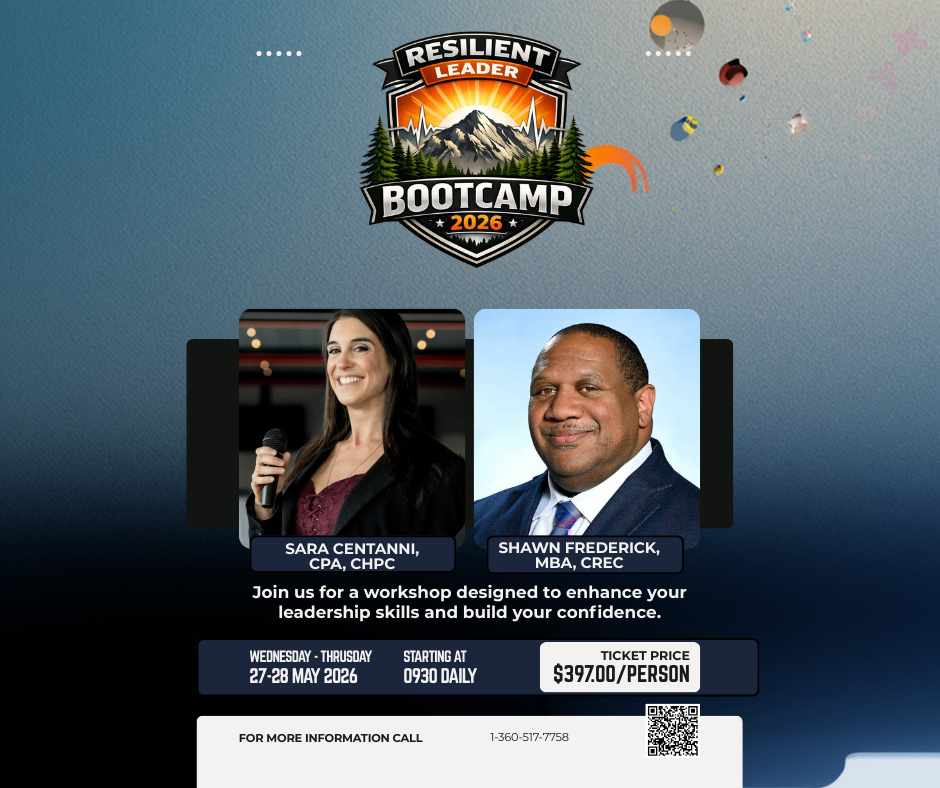
Take the Next Step: Join the Resilient Leader Bootcamp
If you’re ready to stop the turnover cycle and start building a culture of resilience, I want to invite you to a special event.
On May 27–28, 2026, we are hosting the Resilient Leader Bootcamp in beautiful Lake Stevens.
This isn't your typical "sit and watch a PowerPoint" seminar. It’s an intensive, hands-on experience designed to give you (and your managers) the mental tools to lead through any crisis without burning out. We’ll cover everything from the 70% Rule to the nuances of TALK TWO.
Click here to learn more and secure your spot at the Bootcamp!
Not ready for a full bootcamp? No problem. Let's start with a conversation. You can book a consultation to discuss how we can tailor a leadership development program for your specific organization.
The "Great Retention" starts with the leaders you’re building today. Let’s make sure they have the tools they need to succeed.


Comments