

Struggling for Staff Retention? 5 Resilience Strategies to Rebuild Trust in 2026
- shawnfrederick73
- Mar 19
- 5 min read
It’s March 2026, and if you’re leading a team in healthcare, public health, or government, you’ve likely felt the shift. The "Great Resignation" of years past didn't just disappear; it evolved. Today, retention isn’t just about who is leaving: it’s about the "quiet quitting" and the erosion of trust among those who stayed.
I’ve spent a lot of time talking to CEOs and directors lately, and the sentiment is the same: "Shawn, we’ve raised pay, we’ve offered remote work, but the soul of the team still feels fractured."
If that sounds like your boardroom or your clinic, you aren’t alone. The truth is, perks don’t build loyalty. Resilience does. When people feel that their leader has their back and that the organization can navigate a storm without capsizing, they stay.
To rebuild that trust and keep your best talent, we need to move beyond surface-level wellness. We need to go deep into the psychology of how people handle pressure. Here are five resilience strategies I’ve found effective for rebuilding trust in high-stress environments.
1. Practice the "70% Rule" to Combat Perfectionism
In the high-stakes world of healthcare and government, there is a dangerous obsession with 100%. We want 100% accuracy, 100% output, and 100% emotional availability.
Here’s the reality: aiming for 100% all the time is the fastest way to trigger burnout. It creates a culture of fear where people hide mistakes because they’re terrified of falling short. Trust dies in that environment.
I teach a concept called the 70% Rule. It has two parts:
Decision Making: If you have 70% of the information, make the call. Don't let your team drown in "analysis paralysis" while they wait for a perfect answer that may never come.
Energy Management: Encourage your team to give a solid 70% effort to the daily "grind." Why? Because if they are running at 100% capacity on a normal Tuesday, they have 0% left when a real crisis hits.
By normalizing the 70% Rule, you show your team that you value their long-term sustainability over short-term perfection. You’re telling them, "I trust your judgment, and I don't expect you to be a robot." That kind of psychological safety is a retention magnet.

2. Reframe Adversity Together
When a department loses funding or a new regulation complicates a workflow, the natural reaction is frustration. Left unchecked, that frustration turns into cynicism: and cynical employees are the first to walk out the door.
One of the core pillars of effective resilience techniques for leaders is the ability to Reframe Adversity. This isn't about "toxic positivity" or pretending things don't suck. It’s about changing the narrative from "this is happening to us" to "how is this happening for us?"
I’ve seen firsthand how a leader’s framing can change the entire energy of a room. Instead of saying, "We’re understaffed and this is going to be a nightmare," try, "We are short-handed, which means we have to be ruthless about prioritizing what actually matters. What can we stop doing today to protect our peace?"
When you invite your team into the reframing process, you’re building a collective "resilience muscle." You’re moving from a victim mindset to an architect mindset.

3. Leverage Evidence-Based Tools (Like the PR6 Toolkit)
Trust is built on competence. Your team needs to know that you aren't just "winging it" when it comes to their mental well-being. In 2026, employees are savvy. They can smell a half-baked wellness initiative a mile away.
This is why I advocate for using structured, evidence-based frameworks like the PR6 Toolkit. Resilience isn't just a "vibe"; it’s a set of six domains: Vision, Composure, Reasoning, Health, Tenacity, and Collaboration.
When you use a toolkit like this, you give your team a common language. Instead of someone saying, "I’m stressed," they can say, "My Composure domain is feeling low today because of the caseload." This specificity reduces the stigma around mental health and turns "resilience" into a tangible skill they can improve.
If you’re interested in how this looks in practice, check out why psychological safety is a safety issue, not just a perk.

4. Radical Clarity Through a "Trust Compass"
In the healthcare and public health sectors, the goalposts are constantly moving. Nothing erodes trust faster than ambiguity. If your team doesn't know where they stand or where the organization is headed, they will start looking for a more stable ship.
Think of your leadership as a compass. A compass doesn't tell you the exact path, but it gives you a fixed point of reference.
To rebuild trust, you need to provide radical clarity on three things:
The "Why": Why are we doing this specific project? (Connect it to the mission).
The "How": How are we measuring success? (Be specific: ambiguous metrics lead to anxiety).
The "Who": Who can I go to when I’m drowning? (Establish clear support systems).
I’ve found that leadership burnout often happens because of the stress you absorb from your team. When you provide clarity, you lower the collective anxiety of the group, which in turn lowers the emotional load you have to carry as a leader.

5. Move from "Recognition" to "Resonance"
Most retention strategies focus on recognition: the "Employee of the Month" plaques or the occasional gift card. In 2026, that’s not enough. People don't just want to be recognized; they want to feel resonance.
Resonance happens when an employee feels that their specific contributions and their personal struggles are actually seen by leadership. It’s the difference between a mass email thanking the "nursing staff" and a 2-minute conversation with a specific nurse about how they handled a difficult patient on Tuesday.
Building resonance requires you to be present. You can’t lead from an ivory tower. You have to be in the trenches, observing the small wins and the quiet displays of resilience. When you point those out, you aren't just "giving a compliment": you are validating their identity as a professional.
People stay where they feel seen. It’s that simple.
The Road Ahead: Join Us in Lake Stevens
Look, I know this is a lot to juggle. You’re trying to hit targets, manage budgets, and keep your people from jumping ship all at the same time. It can feel like a lonely road.
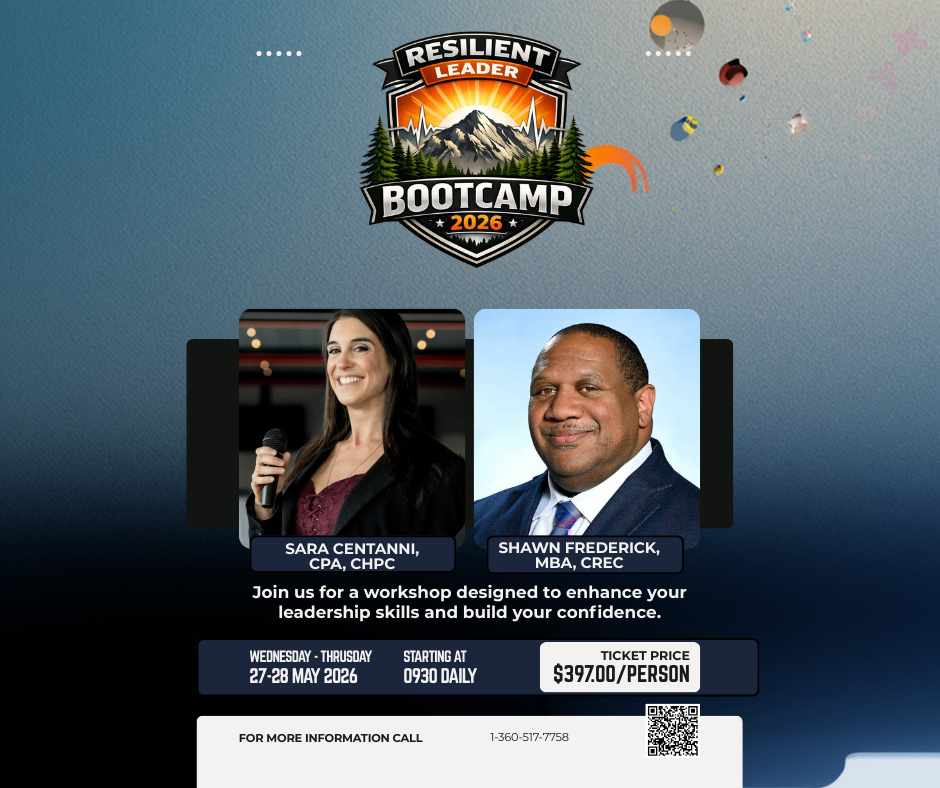
But you don’t have to do it alone. If you want to dive deeper into these strategies and walk away with a concrete plan for your team, I’d love to see you at our upcoming Resilient Leader Bootcamp 2026.
We’ll be gathering in Lake Stevens on May 27–28. It’s not a "sit and listen" seminar. It’s a hands-on workshop designed to help you build the mental resilience and leadership skills needed to thrive in today’s high-pressure environment. We’ll cover everything from the PR6 domains to burnout prevention tactics that actually work.
Final Thoughts
Retention in 2026 isn't a problem to be solved with a spreadsheet. It’s a human challenge that requires a human solution. By focusing on the 70% Rule, reframing adversity, and leading with a "Trust Compass," you can create an environment where your team doesn't just survive: they thrive.
Start small. Pick one of these strategies and apply it this week. See how the energy in the room changes. Trust is built in the small moments, but it pays off in the long-term stability of your organization.
You’ve got this. And if you need a hand along the way, I’m here to help.
Be kind to yourself, and keep leading with heart.
For more insights on leadership and resilience, explore our full guide to mental resilience for leaders.


Comments