

Psychological Safety Matters: Why It’s a Safety Issue, Not Just a Wellness Perk
In the high-stakes world of healthcare and public health, we often talk about safety in terms of protocols, PPE, and sterile environments. We have checklists for surgeries and rigorous standards for medication administration. But there is one safety mechanism that is frequently overlooked or, worse, dismissed as a "soft" HR initiative: psychological safety.
I’ve spent years working with leaders in high-stress environments, and I want to be very clear with you today. Psychological safety is not a "wellness perk." It is not a bean bag chair in the breakroom or an extra hour of yoga. It is a critical operational safety issue. When your team doesn't feel safe to speak up, people get hurt. Mistakes happen. Burnout accelerates.
If you are a leader in healthcare today, you are likely navigating a landscape of workforce shortages, rapid AI integration, and a weary staff. You cannot afford to treat psychological safety as a secondary priority. Let’s look at why shifting this narrative is the most important thing you can do for your organization’s performance and your team’s survival.
The High Cost of Silence
Think about a time when you saw something: a potential error, a missed step, a confusing directive: and you chose not to say anything. Why? Usually, it’s because the perceived "cost" of speaking up (appearing incompetent, being labeled a "troublemaker," or facing a defensive supervisor) felt higher than the benefit of staying silent.
In healthcare, this silence is deadly. Research shows that in low-safety environments, employees suppress information that is vital to the organization’s survival. Problems go undetected until they escalate into full-blown crises. When a nurse is afraid to question a physician’s order, or a public health administrator is too intimidated to point out a flaw in a rollout plan, the entire system is at risk.

Psychological safety is the belief that you won't be punished or humiliated for speaking up with ideas, questions, concerns, or mistakes. Without it, you aren't just losing "morale": you are losing your early warning system.
Not a "Soft" Metric: The Hard Data of Risk Management
We need to stop framing psychological safety as an emotional state and start seeing it as a risk management strategy. When I talk to CEOs and health directors, I frame it this way: Psychological safety is the foundation of high performance.
Error Detection: Teams with high psychological safety actually report more errors, not because they make more, but because they are the only ones honest enough to admit them so they can be fixed.
Innovation: In an era where we are drowning in AI chaos, we need teams who can experiment and fail fast. If failure is punished, innovation dies.
Retention: People don't leave hard jobs; they leave jobs where they feel they have no voice. In the face of 2026 workforce shortages, your ability to retain your team depends on whether they feel safe in your presence.
The Cognitive Load of Fear: Mental Fatigue and Burnout
There is a direct connection between psychological safety and the mental resilience of your staff. Fear is exhausting.
When an employee spends their day "self-silencing": constantly scanning the room to see if it’s safe to talk, editing their thoughts, and worrying about political repercussions: they are using up valuable cognitive resources. This creates a massive "cognitive load" that contributes directly to mental fatigue.
In high-stress healthcare environments, your team is already dealing with life-and-death decisions. If you add the burden of interpersonal fear on top of that, you are fast-tracking them toward burnout. This isn't just about feeling good; it's about preserving the brainpower your team needs to do their jobs effectively. This is where executive resilience coaching becomes vital. It helps you, the leader, understand how to manage your own stress so you don't leak it onto your team and shut them down.
The Privilege of Leadership (TALK TWO)
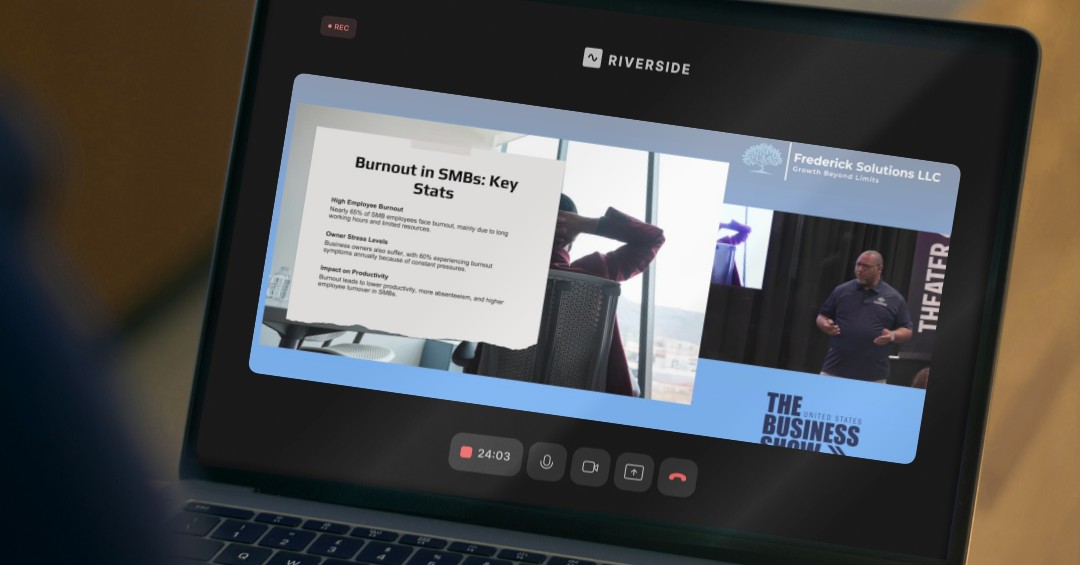
I often speak about what I call the Privilege of Leadership. This is a concept I dive deep into in my presentation, TALK TWO. Leadership isn't a reward for past performance; it is a responsibility to create an environment where others can succeed.
As a supervisor, you hold the thermostat for the room. You decide if the culture is "warm" (safe to speak) or "cold" (dangerous to speak). You have the privilege of being the person who can protect your team from the toxic fear that leads to clinical errors.
But let’s be honest: many leaders are afraid too. You’re under pressure from boards, taxpayers, and the public. It’s easy to become defensive when someone points out a flaw in your plan. However, true leadership requires the mental resilience to sit with discomfort. It means realizing that your "rightness" is less important than your team's "safety."
How to Build a "Speak-Up" Culture Today
So, how do you move this from a concept to a reality? It starts with small, intentional shifts in how you show up every day.
1. Model Fallibility
I tell my coaching clients this all the time: If you want your team to admit mistakes, you have to admit yours first. When you stand in front of your team and say, "I missed the mark on that last directive, and I need your help to fix it," you are giving them permission to be human. You are signaling that the goal is getting it right, not being right.
2. Practice Active Inquiry
Stop asking, "Does anyone have any questions?" Most people will stay silent to avoid looking slow. Instead, ask, "What am I missing?" or "What is one thing that could go wrong with this plan that we haven't discussed yet?" This assumes that there are flaws and makes it the team's job to find them.
3. De-Stigmatize Failure
In healthcare, failure is often treated as a moral failing. We need to shift that. Unless it was a case of gross negligence, failures should be treated as data points. Use "After Action Reviews" to look at what happened without assigning blame. Focus on the system, not the person.

4. Reward the Messenger
The first time someone brings you bad news or challenges your idea, your reaction will set the tone for the next year. If you get defensive, you have just shut down that channel of communication. If you say, "Thank you for having the courage to bring that to me; let’s look into it," you have just reinforced a safety culture.
Moving Beyond "Wellness" to Operational Excellence
When we treat psychological safety as a wellness perk, we make it optional. We make it something we do "when we have time." But if we see it as an operational safety issue: on par with infection control or fire safety: it becomes a non-negotiable part of how we do business.
I’ve seen firsthand how transformational leadership training can change the trajectory of an organization. It’s about building the "grit" to handle feedback and the empathy to understand the pressure your team is under.
Remember, no leader is an island. We are all in this together. The resilience of your organization is directly tied to the safety of your team’s voices.
Your Path to Resilient Leadership
If you’re reading this and feeling the weight of your responsibility, I want you to know that you don’t have to do this alone. Building a culture of psychological safety is a skill that can be learned, practiced, and mastered.
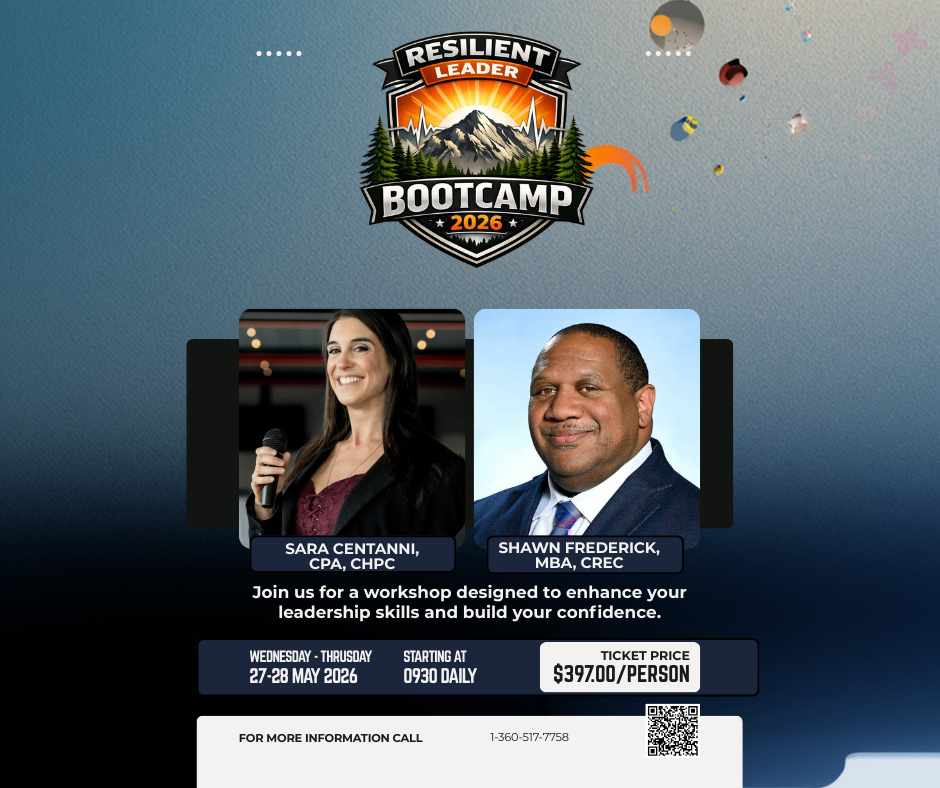
If you are ready to move beyond the surface-level wellness programs and dive into the hard work of building a truly resilient, safe, and high-performing team, I invite you to join us. We are hosting the Resilient Leader Bootcamp 2026 on May 27–28 in Lake Stevens. This is a dedicated time for leaders like you to step back from the chaos, sharpen your leadership tools, and learn how to create environments where your team can thrive without burning out.
Whether you are a new manager or a seasoned executive, the principles of psychological safety remain the same. It starts with you. It starts with a choice to value the "safety" of your team’s input as much as the safety of your clinical outcomes.
Together, we can create a healthcare system that doesn't just survive the challenges of 2026, but leads the way in innovation and human-centered care.
Be kind to yourself, and keep leading with courage.
: Shawn Frederick, CEO, Frederick Solutions LLC


Comments